LA River Community Workshop: From Toxic, Blighted Land to Community Assets
On Friday, August 16, the Center for Creative Land Recycling joined forces with Los Angeles non-profit Mujeres de la Tierra to host an evening workshop to provide education and facilitate discussion surrounding land reuse and the LA River Revitalization. The workshop was followed by a bus tour of former brownfields-turned-parks on Saturday, August 17.
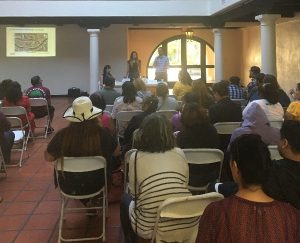
Community members attending the information session at the LA River Center, August 16.
These activities were tailored toward community members and provided an overview of brownfields, the redevelopment process, and opportunities for the community to get involved. The program was conducted in Spanish with English translations. 120 community members attended the Friday evening workshop and asked thoughtful questions regarding remediation practices.
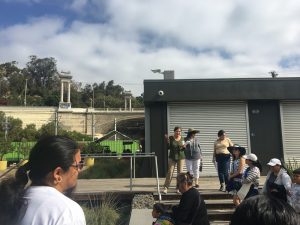
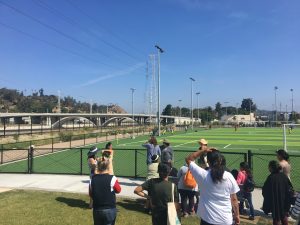
Bus tour attendees at LA State Historic Park (L) and Albion Riverside Park (R).
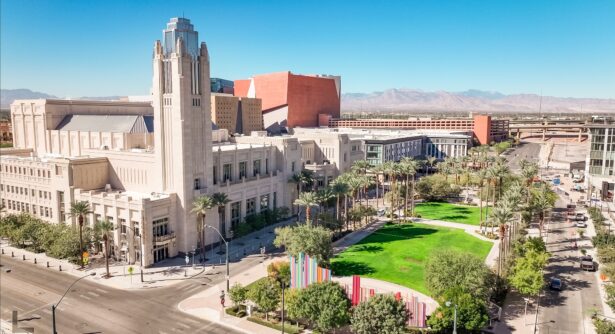
The next morning, 30 attendees joined CCLR and Mujeres de la Tierra for a bus tour of brownfields-turned-parks. The first stop featured LA State Historic Park, a former rail yard site which now features trails, an ecology center with restored wetlands, and water features. The tour continued on to Albion Riverside Park, which was created to protect public health by cleaning up pollution in the City’s watercourses, beaches and the ocean, in order to meet Federal Clean Water Act requirements. The former dairy distribution and warehouse site is home to numerous amenities including soccer fields, greenwater infrastructure and open space. Last but not least, the group visited Hermosa Natural Park. Previously an oil field, this site was transformed into a 10-acre urban park complete with trails, meadows, a nature-themed playground and stunning views of downtown Los Angeles.
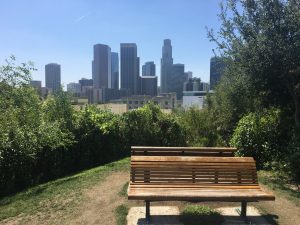

Hermosa Natural Park.
Thank you to Mujeres de la Tierra for their significant work in organizing this community meeting. Other partners and supporters include Mountains Recreation & Conservation Authority, LASAN, and the City of Los Angeles. If you have questions about brownfields redevelopment in your community, please reach out to CCLR’s Executive Director, Sarah Sieloff, at [email protected].
Please see an agenda here.
Please click the speaker’s last name to view their presentation.
Welcome
Elsy Hernandez, City of LA
Sarah Sieloff, Center for Creative Land Recycling
Gladyz Ocampo, Sotomayor Center for Arts and Science
Irma Muñoz, Mujeres de la Tierra
Understanding redevelopment and how it works
Eddie Aslanian, Ramboll
Sarah Sieloff, Center for Creative Land Recycling
From polluted to park: getting it done
Mia Lehrer, Studio MLA
Mexikatzina Akzayakatl, LA Regional Water Quality Control Board
Arthur Heath, LA Regional Water Quality Control Board
Sarah Rascon, Mountains Recreation & Conservation Authority
Forum: What’s next? Speak up, speak out
Miguel Luna, DakeLuna
Irma Muñoz, Mujeres de la Tierra
Veronica Pasilla, Pacoima Beautiful