
Communities across the rural west are using brownfield funding for economic and community development. From a small town gas station to a shuttered sawmill- learn how rural communities are transforming underutilized and abandoned sites back to community benefit.

Crescent Mills, CA
An abandoned sawmill provided the platform to rebuild the local economy, and structures destroyed by fire.
2018-2025
Project Description
Small towns across the Mountain and Pacific West have suffered many challenges. The decline of the timber and mining industries have led to job and population losses. Drought, disease and pest have killed more than 100 million trees since 2010, and fire has decimated entire communities.
This story is true in the small communities of Indian Valley at the intersection of the Cascade and Sierra Nevada Mountain Ranges in Plumas County, California. The Sierra Institute for Community and the Environment saw an opportunity to address both unemployment and the hazardous dead trees through the redevelopment of an abandoned sawmill site.
The Louisiana Pacific sawmill sat near the population center of Crescent Mills with excellent highway, rail, and electric substation access and favorable zoning. However, the site was contaminated by oil and chemicals (including arsenic) historically used in lumber production, holding back redevelopment. The Sierra Institute selected the site in 2014 for redevelopment and used several grants to fund the site assessment, investigation, and planning.
In 2018, The Sierra Institute began engaging CCLR in its EPA MARC grants for the 28-acre site. CCLR reviewed and advised for the original $600,000 EPA MARC (Multipurpose, Assessment, Revolving Loan and Cleanup) grant was used to clean up the worst areas of contamination on the site, including where used oil and incinerator ash were discarded. CCLR continued to keep in touch with the Sierra Institute, assisting with a total of four MARC cleanup grant applications for the Sierra Institute, all of which were awarded for a total of $2.1 million in funding.
Fire Sparks Renewed Interest in Local Lumber Production
In the summer of 2021, the Dixie Fire burned nearly one million acres and destroyed 1,329 structures across five counties. While the Dixie Fire was still burning, the Sierra Institute and others began to discuss how to assist reconstruction. The need for lumber to rebuild the lost structures was complicated by the COVID-19 supply chain crisis, doubling the price of lumber and drastically reducing available supply.
The Sierra Institute quickly pivoted, making arrangements to develop a sawmill on the site. Leveraging its partnerships, the Institute was able to utilize an existing grant from the Sierra Nevada Conservancy to purchase second-hand mill equipment and secure emergency permitting for the operation. J&C Enterprise, a 4th generation timber harvesting company with local knowledge was brought in to manage the mill.
The mill cut its first board in December 2021, just two months after the Dixie Fire was extinguished. Now fully online, it can process roughly five truckloads of lumber a day to create 5-million board feet of lumber per year. The process is transforming burned and hazard trees into valuable building materials, benefiting local communities through job creation and locally-sourced products.
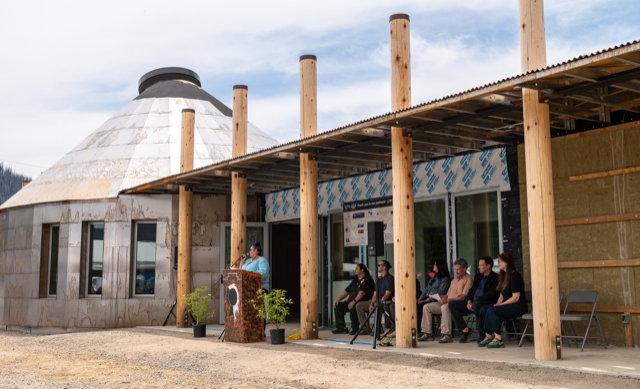
Project Update: Sierra Institute Cuts Ribbon on New Fire-Resistant Homes
From Clean up to Build up
In October 2025, the Sierra Institute closed out its final two EPA Cleanup grants and the Crescent Mills property can officially claim its status as a former brownfield! After several years of planning for redevelopment, the Sierra Institute is expanding into cross laminated timber (CLT) manufacturing. CLT is a dense, fire resistant, carbon smart building material manufactured from small diameter trees cleared to reduce forest density and limit fire risk. When paired with a non combustible roof with minimal overhang, metal siding and defensible space around the base of every structure, homes built using CLT are extremely fire resistant– making them an ideal choice for those rebuilding from wildfires in the Sierra region and elsewhere.
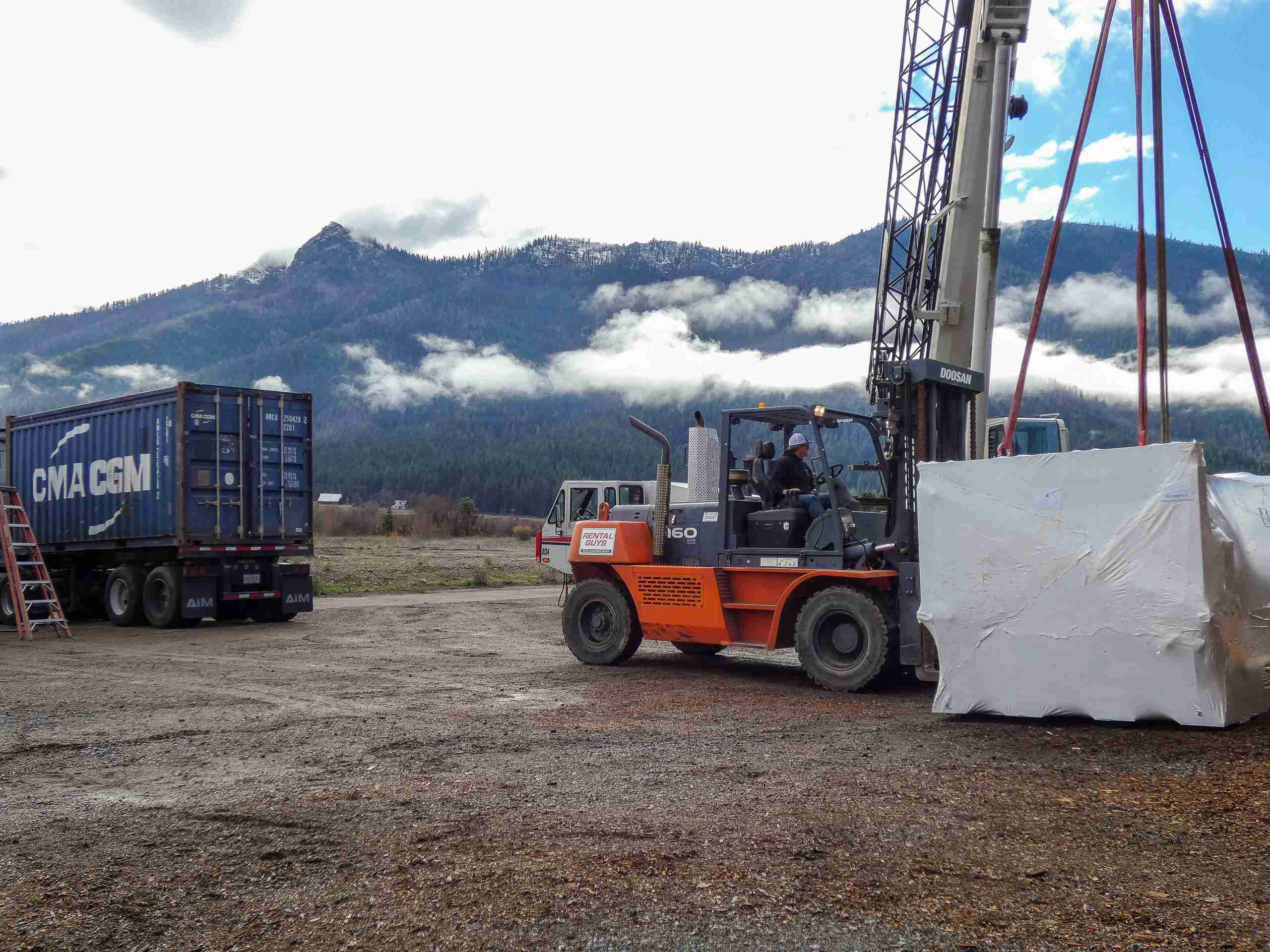
The Sierra Institute established Mosaic Timber, a for-profit business, to manage the new CLT operation. In November 2025, Mosaic received a shipment of specialty manufacturing equipment, the first of its kind in California. Mosaic and the Sierra Institute are currently seeking investors for the construction phase of the dedicated CLT production facility on the Crescent Mills campus with a goal to open the facility by the end of 2026.
Watch the Crescent Mills Success Story

Project Details

Total Area: 28 acres

Previous uses: Sawmill

Current uses: Wood utilization campus developing bioenergy and timber products

Benefits: Job creation, renewable energy, sustainable building materials, locally-sourced lumber

Financing: EPA brownfield grants, Sierra Nevada Conservancy and Resource Legacy Fund grants, U.S. Forest Service, CAL FIRE, Tahoe Truckee Community Foundation, private investment, non-profit funding

Services provided: Grant assistance
Project Impact
0
Full time jobs
0 M
Board feet of lumber per year
0
CLT can withstand burning for 90 minutes, 5x longer than traditional wood framing
Photo Gallery


Partner Organizations
The Sierra Institute is a non profit working to support healthy forests, build vibrant communities, and develop youth stewards in rural California.
EPA provided several grants to assist in the assessment and cleanup of Emeryville brownfields.
DTSC provided techinial assistance on the site assessments and investigation
This state agency provided grant money crutial to the aquisition of sawmill products

The Center for Creative Land Recycling provides free technical assistance to state and local governments, tribes, non-profits, housing authorities, development agencies, and other public entities through a cooperative agreement with the U.S. EPA under the Brownfield and Land Revitalization Program. We serve EPA Regions 9 and 10, which includes Alaska, Arizona, California, Hawaii, Idaho, Nevada, Oregon, Washington, and the Pacific Island territories.
By recycling sites instead of perpetuating sprawl, using nature-based remediation for contamination, and working with local ecosystems to build climate resilience, a brownfield project can mitigate its environmental footprint and offer a new, sustainable future. Creative land recycling employs nature-based solutions from inventory to remediation and reuse.