Brownfields as Interim Housing Solutions
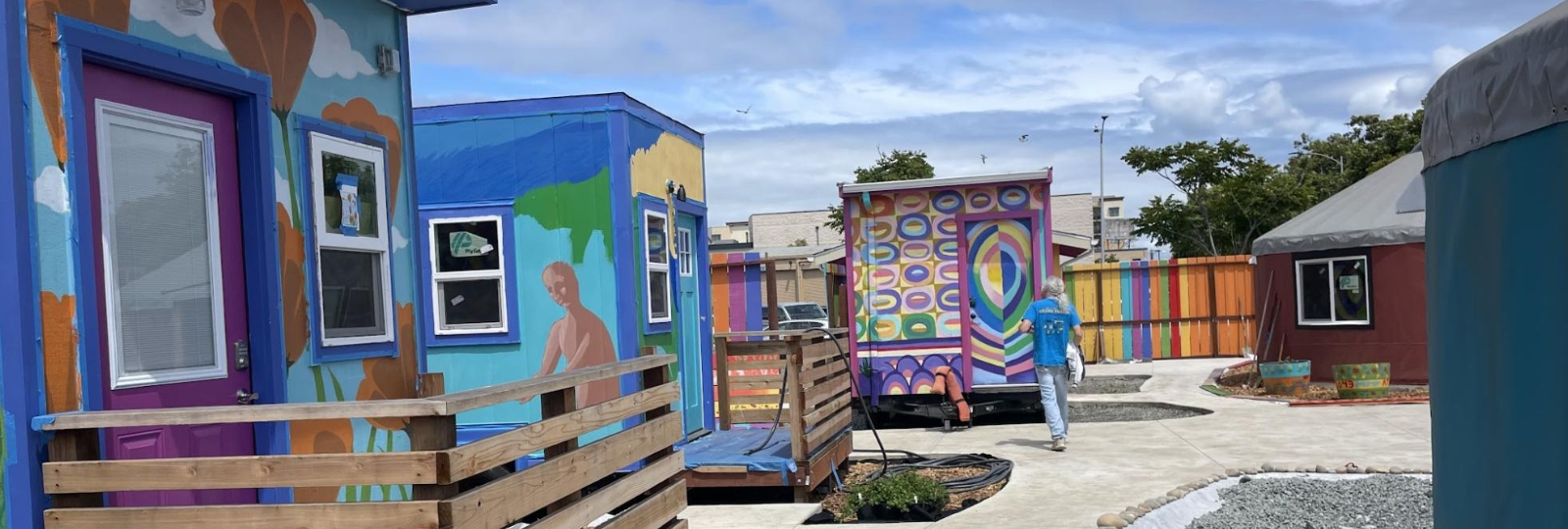
On a clear sunny day in September, more than 100 people gathered amongst a kaleidoscope of tiny homes in Richmond, California to celebrate the opening of the new Tiny Village Spirit, a community of 12 transitional housing opportunities for youth exiting foster care. Volunteers spent many hours, and many more gallons of paint, ensuring the village is bright and inviting- covering every square inch of the homes and fencing with murals and positive messages.
These 24 emergency homes sprung from a former hotel site in less than two years, and with a price tag of less than $1 million – a budget and timeline that would be impossible for traditional housing. “We were looking at a comp project recently and the budget is $14 million.” Said Sandy Hindman, executive director of Tiny Village Spirit, “So we’re basically 10 times cheaper than the alternative.”
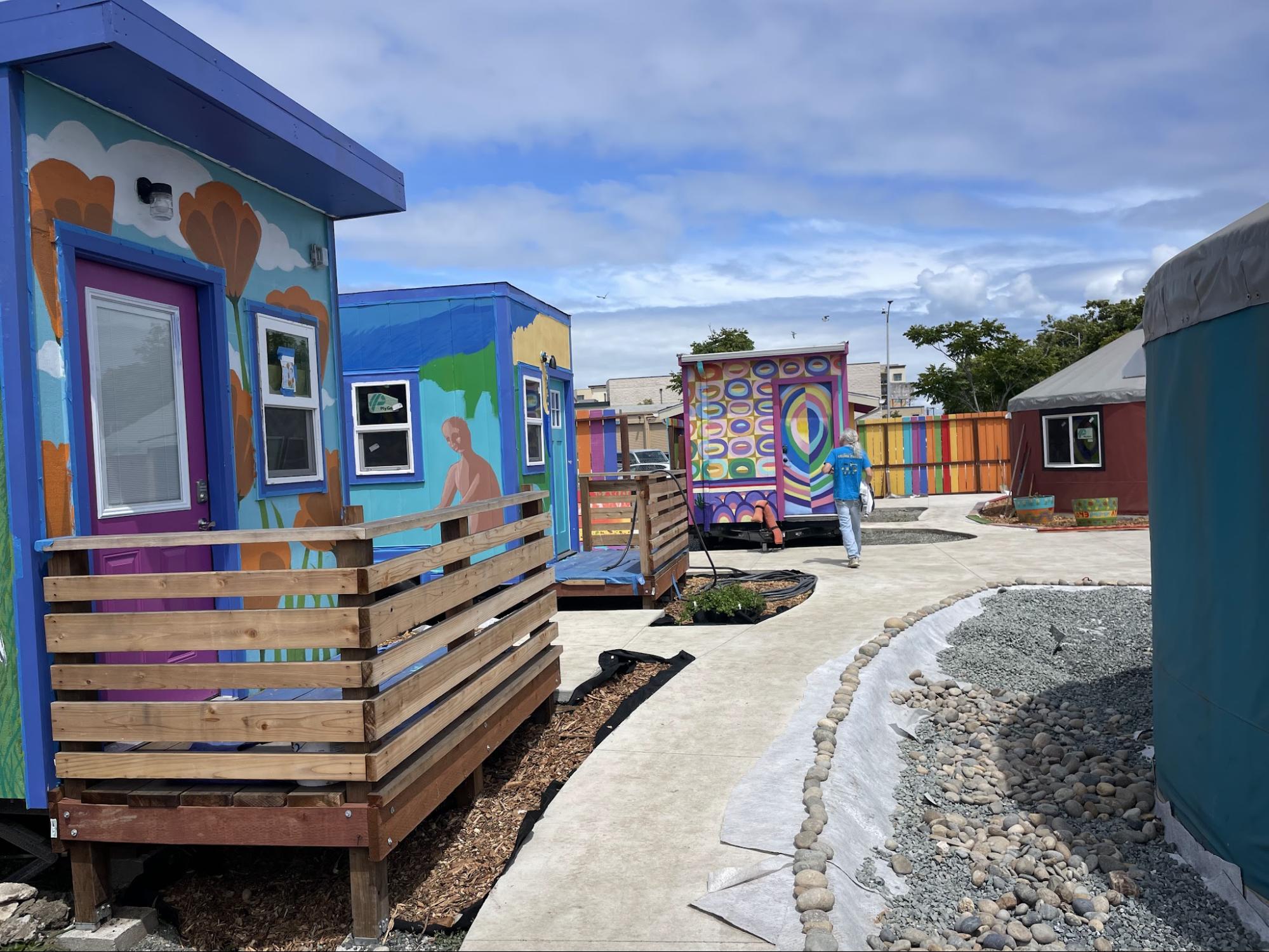 | 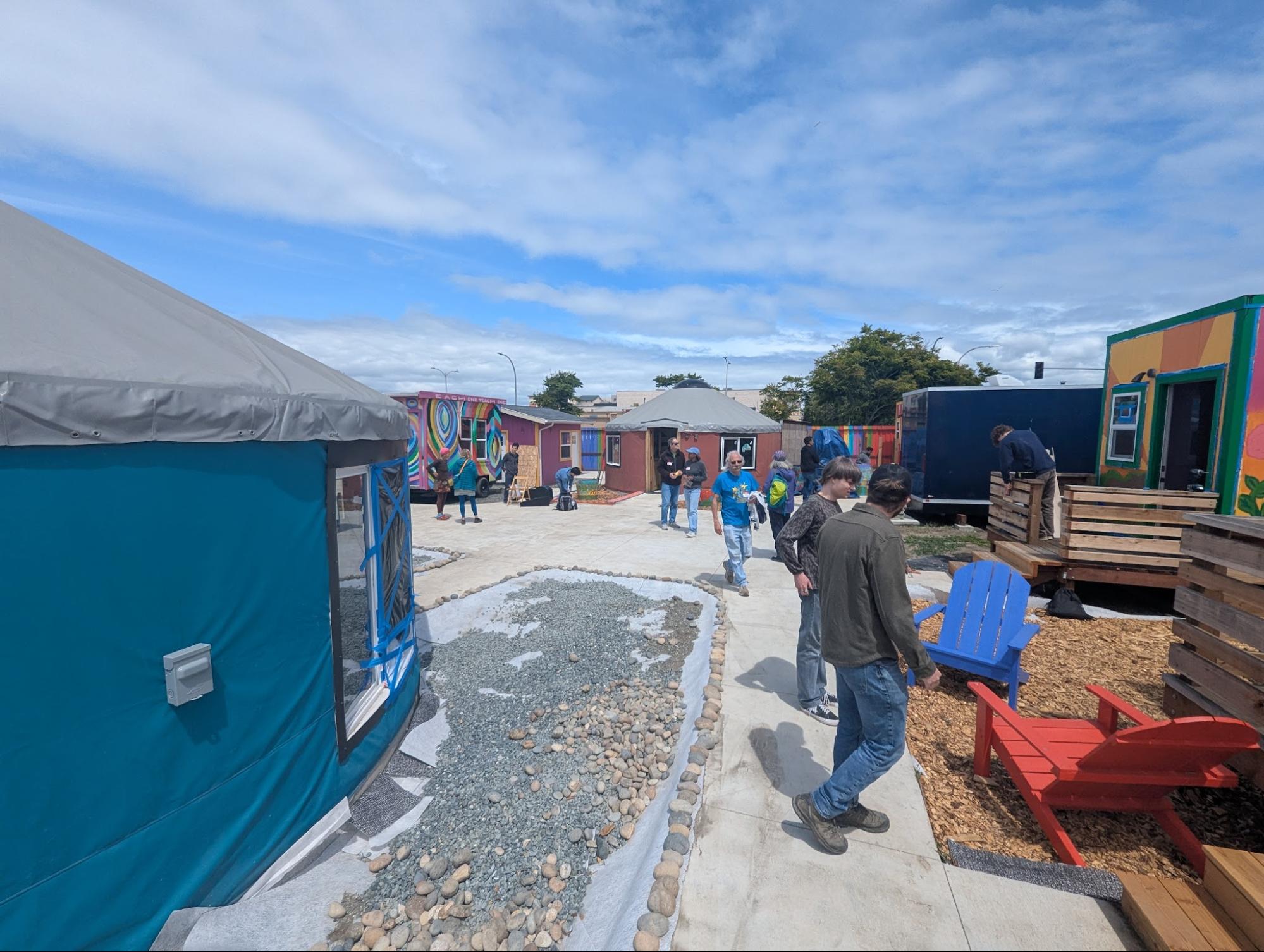 |
Tiny Village Spirit – Richmond, CA – tiny homes surrounding two common facility yurts
Watch Beyond Vacancy: Using Brownfields for Interim Housing, Tiny Villages and Transitional Uses Topic Talk from the 2026 California Land Recycling Conference.
The Need for All Types of Housing
The affordable housing crisis in the United States is complex and multifaceted. While houses at all affordability levels are needed, the need for affordable homes is acute, with only 37 affordable homes available (national average) for every 100 extremely low-income renters. The lack of affordable homes is most evident on the west coast, with Nevada, Oregon, California and Arizona having some of the lowest availability in the nation (16 to 28 affordable homes available per 100 renters). With so few homes available, it is inevitable that some people will end up without shelter. The rise in homelessness across the nation is directly linked to the lack of affordable housing.
Building more affordable homes is the best long term solution to both the homelessness and affordability crisis. However, building permanent housing takes time and lots of money, and many people need shelter now. Interim housing such as tiny home communities, safe RV parking, hotel conversions and other temporary shelters provide a stop-gap measure to provide people with shelter, resources and support, often while they wait for a permanent housing solution.
Interim housing solutions can be deployed faster and more affordably than permanent housing, providing a place for people now. While these solutions are not without their challenges, advocates highlight that these interim housing solutions are safer than unmanaged encampments and better connect residents with services and support to stay off the streets. Interim housing sites can also vary widely in design and services. From small, more self-managed villages, to larger municipal sites run by dedicated non profits or companies. While success rates vary from site to site, as many as 86% of families and 67% of single adults who move from homelessness to interim housing will find and retain permanent housing.
Considerations of Brownfields for Interim Housing
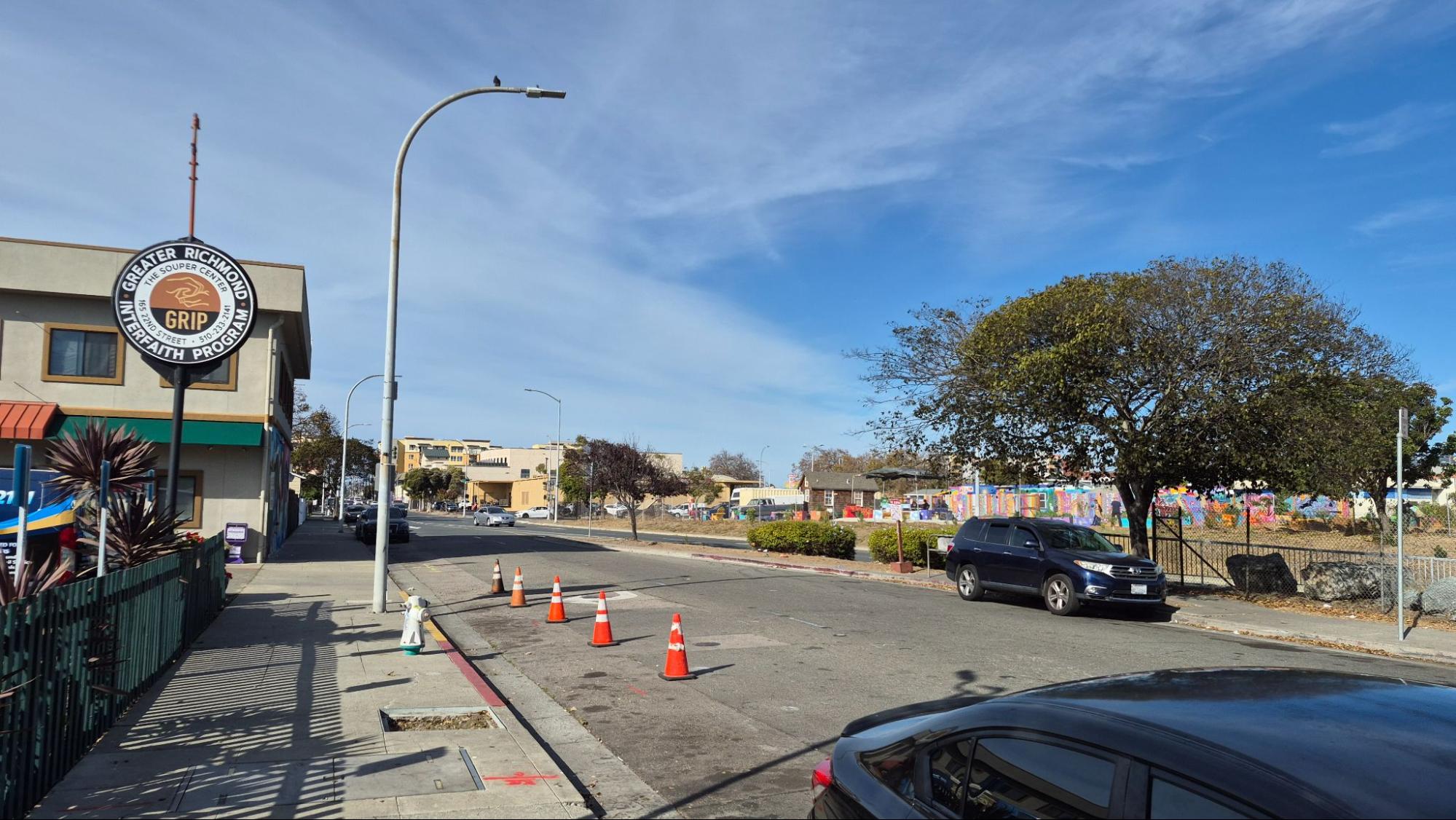
Richmond’s Tiny Home Village is across the street from the Greater Richmond Interfaith Program (GRIP) which provides meals, case management and long-term resources to help people reach self-sufficiency. The village is also a 3 minute walk to a bus stop and a 10 minute walk to the Richmond BART station.
Any time homes are being considered in infill settings, environmental assessment is a key first step to ensure the land is clean and safe for people to stay. The location that now houses Tiny Village Spirit in Richmond once housed a hotel. The site was assessed by an EPA Community Wide Assessment Grant on behalf of the City of Richmond. Some lead from lead paint and VOCs were found in the assessment. The nonprofit used an asphalt cap and elevated the homes to protect residents and staff from the contamination.
Some brownfield sites can be ideal locations for quick-housing fixes. However, not every brownfield is a good fit for interim housing. The best sites are well connected to the community, with easy access to services, jobs and transportation. Sites that meet this criteria can face additional hurdles to redevelopment including: higher land costs and more local opposition to interim housing. Sites that are further away from the community, for example sites in light industrial or other non-residential corridors, may provide faster avenues to reuse, but diminish positive impacts by isolating residents. Additionally, larger municipalities may want to strategically place solutions at various sites around the city, or near neighborhoods with high unhoused populations. These pros and cons will need to be balanced when identifying sites for interim housing solutions.
Watch: U.S. EPA Grants Support Brownfields Revitalization in Richmond, California
Contamination and cleanups: cleanup requirements and contamination thresholds are different for interim housing sites vs permanent. Residential development requires a high level of cleanup that can make some sites cost prohibitive, especially for extremely affordable housing that lacks a profit margin. Interim or temporary housing doesn’t have to meet these rigorous criteria as people aren’t expected to stay there long.
Additionally, interim housing solutions rarely require grading for foundations, or other heavy construction. This can provide for creative solutions, such as using asphalt to cap contaminated soil and raising tiny homes above the ground to mitigate vapor exposure. In the case of Jojo’s Place, HSNAZ opted to remediate to residential standards by removing asbestos-laden materials as part of the larger renovation. Some states, like California, require residential cleanup standards for hotel conversions, which can increase timelines and costs for these projects compared to tiny homes.
The health of residents, and employees who may spend more cumulative time on a site, should still be considered and balanced against cleanup costs. Grants, following an approved cleanup plan, and long term monitoring can ensure exposure to potentially hazardous materials remains below levels of concern.
Showcase: Jojo’s Place, Flagstaff Arizona
Route 66 through Flagstaff was once lined with mid-century motels and restaurants. The construction of Interstate 40 led to the decline of many of these establishments, including a former Travellodge. Non-profit Housing Solutions of Northern Arizona (HSNAZ) purchased the hotel with plans to convert 44 hotel rooms into studio apartments to provide transitional housing for people exiting homelessness.
The 47-year old hotel needed a lot of updating and modernization to meet modern code including: addition of a sprinkler system, kitchens, improved ADA accessibility, addition of on-site laundry, upgraded HVAC, electrical and plumbing. HSNAZ identified asbestos in drywall and flooring prior to rehabilitation. The non-profit secured $150,000 in Arizona Department of Environmental Quality (ADEQ) brownfield funding for remediation and additional testing. Drywall removal as part of the asbestos remediation revealed previously unknown structural issues that the non profit was able to address, ensuring the site will be structurally sound for many years to come.
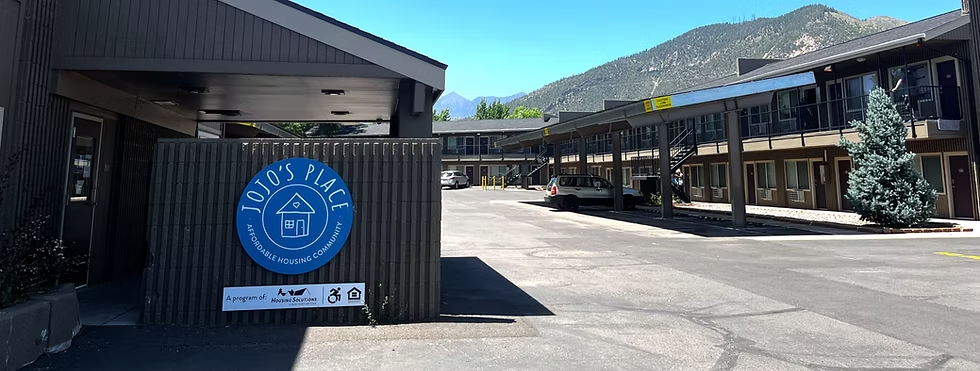
Shuttered motels provide a strong foundation for transitional housing. These sites still need considerable investment to add amenities and ensure the structures meet modern code.
In February 2023, less than two years after the plan was originally drafted, Jojo’s Place opened. The former motel now provides 44 furnished apartments to help low-income households transition from homelessness to permanent housing. Jojo’s place is named in honor of a former Housing Solutions resident who successfully transitioned to permanent housing with her son.
“What we found in other transitional housing programs is that 12-month security is really important to moving in, stabilizing, knowing you have a place not just for tonight and tomorrow night, but for the next month and the next month.” – Devonna McLaughlin, HSNAZ CEO. Residents are provided with a 12-month lease that they can easily get out of if they find permanent housing. Residents can stay at Jojo’s Place for up to 24 months.
Challenges Facing Interim Housing
No solution to any problem is perfect. There are always pros and cons to be weighed. Interim housing certainly has its share of challenges. Hastily constructed villages can run into infrastructure issues such as: flooding during storms, inadequate heating or cooling during extreme weather and broken showers/toilet facilities. When funding runs out interim housing can close, leaving residents without a home. Some housing advocates, especially in Oakland, cite strict rules like curfews and sobriety mandates as reasons why some in need avoid local interim housing programs. Housing first approaches that seek first to house, then to help are often more successful than programs that tie housing to behavior. Additionally, concerns around mismanagement of funds has happened at some sites, particularly in Los Angeles.
Including affected unhoused residents, ensuring interim housing is managed by committed and trustworthy organizations, connecting residents with services to help overcome trauma and find permanent housing and employment opportunities, and committing a reasonable budget to maintenance and upkeep can mitigate some of these issues. It is worth noting that none of these concerns are limited to interim housing solutions. From encampments to permanent housing, it takes patience, commitment and compassion to ensure formerly unhoused residents heal and thrive.
Conclusion: A Step in the Right Direction
Tiny home villages, safe camping sites and other interim housing models can provide stop-gap housing and interim solutions that get people off the streets as they wait for long term solutions. Permanent supportive housing is needed for residents to transition into for long-term success. Without robust affordable housing and programs like vouchers and subsidies, many will end up back on the streets or stay at interim housing for far longer than programs intend for.
Communities should continue to invest in interim housing solutions while also planning a robust pipeline of long term housing solutions for people to transition into. Long term housing does not always require the construction of new apartment complexes: restoration of existing affordable homes, rehabilitation of abandoned properties and hotel conversions can all provide faster and more affordable models to increasing permanent affordable housing supplies. These projects may also qualify for brownfield funding.
The Center for Creative Land Recycling can provide technical assistance including: site identification, planning, community engagement, funding identification and EPA brownfield grant review to facilitate the rehabilitation of existing housing or construction of housing on brownfield sites. Schedule a meeting to discuss your community’s unique needs.