2025 Brownfield Reuse Milestones
The Center for Creative Land Recycling is a national nonprofit organization dedicated to promoting sustainable, community-led and responsible reuse of underutilized and environmentally-impacted properties known as brownfields. In 2025, the CCLR team educated, advocated, assisted and convened stakeholders with the end goal of revitalizing neighborhoods through land recycling. We also reviewed grants that secured more than $30 million for brownfield reuse, and celebrated more than a dozen milestones– from competition of cleanups to ribbon cuttings– with grantees that received our support. Below are some of the results of this work.
- Assisted 91% of FY25 EPA Grant Selectees in Regions 9 and 10, Securing $30.9 Million in Funding
CCLR provides cost-free grant review and support to federal brownfields grant applicants throughout the American west as the EPA Technical Assistance to Brownfields Communities (TAB) provider in Regions 9 and 10. CCLR played a pivotal role in supporting 30 (91%) successful applications in these regions and $30.9 million (87%) of the total awarded to these regions.
“We can’t thank CCLR enough for all your help with the application!! Your expertise and support really made for a better, more focused application. We are so excited to get started!” -Region 10 Selectee
EPA MARC grants are highly competitive. In total, only 44% of applicants nationwide were selected. In regions 9 and 10, EPA selected 47% of applications it received. Applicants who received CCLR support saw amazing success, underscoring the crucial role TAB providers provide to guide communities through the complex grant application process.
In addition to EPA MARC grants, in 2025 CCLR increased its support of job training grants in both regions 9 and 10. In region 9. CCLR and EPA conducted a robust outreach campaign with targeted outreach, webinars and tailored and responsive technical assistance. As a result of this outreach, a record number of applications were received from applicants in Region 9. Additional entities expressed interested in applying to the job training grant in FY27. In region 10, CCLR interviewed and profiled four successful EPA job training grantees for a video on the program that will be released in early 2026. The video showcases programs in urban, rural and tribal communities with high job placement rates and high rates of satisfaction with the program from both grantees and students.
- Hosted Four Vision to Actions in Three States and Two Inventories in Two Additional States
Vision to Actions are comprehensive community-led planning exercises where CCLR helps leaders and residents develop a plan for the redevelopment of a brownfield. The program consists of two or three community meetings supplemented with surveys to guide reuse. The final Vision to Action reports provide a step-by-step guide to realize the vision, including timeline and potential funding avenues. In addition to the four Visions to Actions hosted in 2025, CCLR and our partners received an award from EPA for our 2024 planning efforts in Lincoln County NV.
In 2025, our Vision to Action program brought us to Tazlina, AK, where we assisted the Native Village with the design of a community center on the site of a former school. Palouse, WA to navigate a fractious conversation about the demolition and reconstruction of a historic (but structurally unsound) downtown landmark, the St. Elmo Hotel. Pima County AZ to reimagine a former waste water treatment facility that sits on more than 50 acres, near downtown Tucson, and on the banks of the Santa Cruz River into a dynamic mixed use vision that balances habitat protection and outdoor recreation with revenue-generating commercial businesses. CCLR Consultant Norman Wright leads our Vision to Action process with help from a number of team members including Devyn Rainwater, Joy Britt, Lujain Altawarah, Emily Good and Elizabeth Richardson.
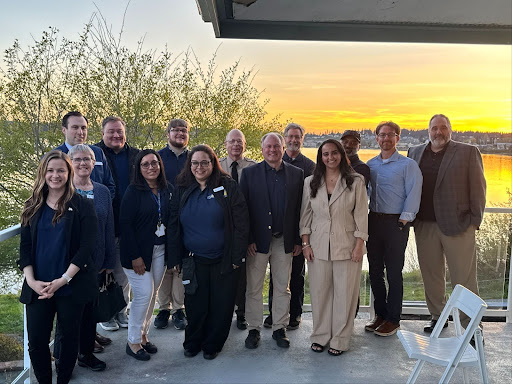
Oak Harbor Mayor, City Leaders and CCLR Team Members Lujain Altawarah (forth from right) and Norman Wright (second from left) at the second Oak Harbor Visioning Session in April, 2024.
Our final Vision to Action in Oak Harbor was around the ambitious revitalization of the City’s waterfront. Planning for the waterfront has started and stopped for decades without much progress. Catalyzed by two prominent brownfield properties, CCLR helped the City envision its waterfront as a vibrant place with new residences, tourist-friendly shopping opportunities, and new revenue sources for the City while preserving waterfront views and access. In September, the Oak Harbor City Council adopted CCLR’s Vision unanimously, and the two brownfield properties have already been demolished, setting the stage for the City to finally realize the waterfront it deserves.
In 2025, CCLR led two brownfield inventory projects in Ash Fork, Arizona and Santa Ana, California. CCLR was a project lead in Yavapai County’s efforts to systematically identify candidate brownfield sites for revitalization in Ash Fork, Arizona with the support of community organizations and residents. This project involved compiling parcel-level data, historic land-use research, and environmental indicators into a structured inventory suitable for grant planning and phased assessments. The work resulted in a practical planning tool that strengthened the County’s readiness for EPA Brownfields funding, supported long-term redevelopment strategy, and provided a foundation for aligning environmental cleanup with economic development and community revitalization goals.
Consultant Elizabeth Richardson is also helping Orange County Environmental Justice identify and prioritize underutilized and potentially contaminated properties in Santa Ana neighborhoods. Work on this inventory project will continue into 2026 with a final report anticipated in spring.
- Trained 2,582 Registrants Across 14 Webinars
CCLR hosted 14 webinars in 2025, with an average registration of 184 people per webinar. Our top webinars by registration were: Planning for a Successful Fall EPA Brownfield Grant Application, Grant or No Grant: Let’s Navigate Your Next Move and Vacant to Vibrant, which was an introduction to brownfield series. We also hosted webinars to empower nonprofits in brownfield reuse, help practitioners share their success stories, and promote our Park Guide.
In addition to the webinars our organization hosted, we were also invited to serve as a subject matter expert by the Bloomberg Foundation and National League of City’s Infrastructure Hub webinars on EPA Brownfield Grants. CCLR staff and consultants led a four-hour grant training, and provided NOFO information on a follow up webinar after the application period opened.
- Hosted Three In-person events, and Supported Eight Others
CCLR brought its knowledge and leadership directly to community leaders and brownfield practitioners through three in-person events in California: one day workshops in Sacramento and Fresno, and the three-day California Land Recycling Conference (CALRC). These events attracted more than 400 attendees with 91% of attendees reporting a high degree of ability to use what they learned in their job or community.
In addition to CCLR-Hosted events, CCLR led sessions at other conferences from Alaska to Guam, Chicago to Washington DC. At the National Brownfield Training Conference, CCLR led 10 sessions- the highest number of any organization! We attended trade conferences and tribal conferences, sharing information and increasing understanding of brownfields among a wide variety of professionals.
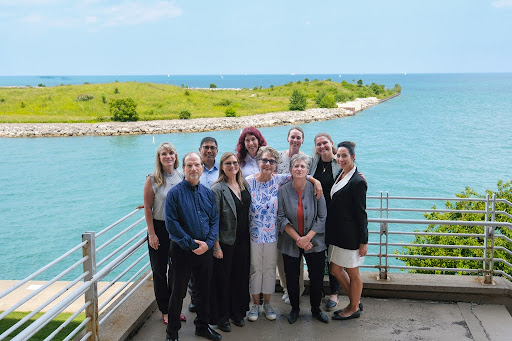
CCLR Team at the National Brownfields Training Conference in Chicago, Il in August
- Published Two Original Resources and Four Videos
In 2025, CCLR released its very successful “Let’s Create a Park! Planning a Creative Funding Strategy for Successful Park Development”. This resource was championed by Sarah Fingerhood. An article written by Anna Maria Camardo was featured in PRB+ (Park & Recreation Business) Magazine as the Dec. 2025 cover story. Let’s Create a Park! also led to a popular webinar, conference speaking engagement, and an increase in park-related technical assistance for brownfield reuse. CCLR also updated our “Using Data to Make Your Case” to reflect changes in federally-available data resources, and to supplement lost data with new resources from states and organizations.
We also created four success story videos that featured reuse stories from the Roger Road Waste Water Treatment Plant in Tucson, Light Rail and community redevelopment in Honolulu, the Indian Valley Wood Utilization Campus in California, and a video highlighting the successes of four EPA Region 10 job training grantees.
- Celebrated Milestones for Brownfield Revitalization Projects CCLR Supported
Brownfield reuse is a long game. Typical timelines from site identification to end use realization can be ten years or more. However, due to the hard work of brownfield practitioners, and accelerated timelines made possible by the California Department of Toxic Substances Control’s Equitable Communities Revitalization Grant (ECRG), CCLR was able to celebrate a number of milestones with grantees in 2025. CCLR serves as the technical assistance provider for both EPA Regions 9 and 10, and DTSC’s ECRG grant. In this role, we shepherd grantees through the redevelopment process, ensuring they remain compliant with their grant terms, answering questions regarding reporting, pollution thresholds, and procurement, and being there to celebrate their wins as projects move forward.
January: Milagro on Oracle, affordable senior housing opens in Tucson, AZ. This transformation of two pre-WWII motels and vacant lots into 63 units of affordable senior housing is a significant step for Tucson in its efforts to create more affordable housing and end homelessness. An EPA Brownfields Revolving Loan Fund and an EPA assessment grant (which CCLR reviewed) assisted the City of Tucson with the identification and removal of hazardous building materials from the 85-year-old motels to make way for this reuse.
March: The Hive opens at the Superior Enterprise Center. The first rural Hive opened in Superior, AZ to provide the community access to technology, providing opportunities for innovation, collaboration and digital inclusion. The Superior Hive became the non profit’s most popular location, illustrating the great need for technological connection in rural communities. The Superior Enterprise Center is housed in the original Superior High School, a 99-year-old building that has benefitted from funding from an EPA Coalition Grant and ADEQ brownfield funding. CCLR supports Superior with its grants and the advancement of the redevelopment of the High School into the Superior Multigen Center, housing City services, senior center, library, job training, gym, and other community services. The Multigen Center is anticipated to open in 2026, the high school’s centennial.
March: Phase 2 of Victory Logistics District breaks ground in Fernley, NV. Supported by a 2014 EPA Assessment Grant to the Northern Nevada Development Authority (NNDA), this logistic district provides jobs and tax revenue in the rural Northern Nevada city of Fernley. CCLR has supported NNDA with its EPA Assessment Grant for many years.
April: City of Brisbane releases a Draft Environmental Impact Report for the Brisbane Baylands, a mixed used development with 2,200 housing units, 6.5 million square feet of commercial office development and 500,000 sq ft of hotel space, as well as conservation and outdoor recreation areas on an 684-acres. Residents had six months to provide comments on the DEIR. Now the City will prepare a final EIR and vote on whether or not to approve or deny the plan. If Brisbane’s City Council opts to approve the EIR, this large brownfield project will continue towards redevelopment. The site includes former rail facilities and the former Brisbane landfill. CCLR provided technical assistance during the application process, grant review, and grant management support.
July: East Bay Asian Local Development Corporation (EBALDC), in partnership with Abode Housing, opens Ms. Margaret Gordon West Port in Oakland, CA. The affordable housing complex is now home to 58 individuals/families, many of whom are transitioning out of homelessness. The facility features permanent supportive housing with on-site services provided by Abode Services. The development was made possible with support from an $829,966 ECRG cleanup grant to prepare the site, which once housed an auto shop, for its reuse. CCLR has supported EBALDC with ECRG grant application and grant management as well as support with potential EPA grant applications.
CCLR attended the event with DTSC’s Director Katherine Butler, and Oakland Mayor/former Congresswoman Barbara Lee, and of course, Ms. Margaret Gordon, the environmental justice pioneer and advocate for whom the building is named for.
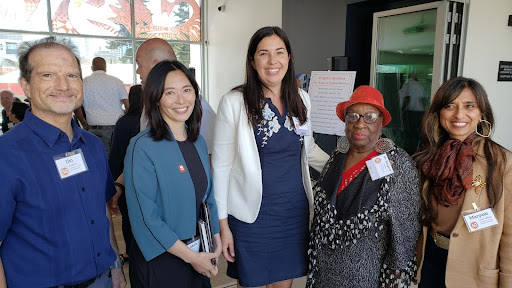
CCLR Revitalization Specialist Jim Bergdoll (left) With EBALDC CEO Janelle Chan, DTSC Director Katherine Butler, Ms. Margaret Gordon and DTSC Brownfield Development Manager Maryam Tasnif-Abbasi
July: Mountain Line Connection Center in Downtown Flagstaff, AZ opens. More than 100 years after the 216 West Phoenix Ave was used as a creosote pit to treat utility poles and railroad ties for the growing city of Flagstaff, this site is now a thriving, Gold-level sustainable building that supports and expands Northern Arizona mass transit. Between 2007-2010 the City of Flagstaff secured $150,000 in EPA and ADEQ grants to investigate and clean up the site. In 2021, a Phase I ESA showed the site had no residual contamination and was able to be redeveloped. The creation of the Connection Center also daylit the Rio de Flag, returning the River to its original channel, and alleviating flooding concerns for downtown Flagstaff. CCLR assisted Flagstaff with its EPA grants for the past ten years.
August: The City of Anaheim, CA breaks ground on Lincoln Beach, an unique affordable housing community that will create 47 affordable units for low-income seniors and youths exiting foster care. The City acquired a $1.3 million-dollar ECRG cleanup grant to remove legacy contamination from the former Americana Motel site. Development partner Housing Opportunities will lead construction of this innovative project. CCLR assisted Anaheim with both its ECRG grant and EPA MARC grants that supported the project.
August: Hayward Area Recreation and Park District (HARD) breaks ground on East 14th St Park. The park-poor Ashland neighborhood in San Leandro, CA will soon have a new recreation space to be proud of! HARD utilized $850,000 from an ECRG cleanup grant, HARD was able to remediate the site, which was once home to a poultry processing farm, mattress warehouse, and RV storage facility. The park will feature play areas, picnic spaces, walking paths, shade trees, sports courts and fitness stations and connect to a new community center, also being made possible thanks to a separate ECRG grant. CCLR has supported HARD with application and management of its ECRG grant, as well as guidance and support for additional funding through U.S. EPA.
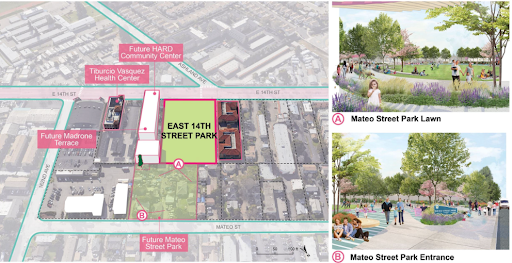
East 14th Street Park Plan (www.haywardrec.org)
September: Residents began moving into the new Nellie Hannon Gateway affordable rental community in Emeryville, CA. The 100% affordable housing development features 90 apartments while the main floor houses the Emeryville Citizens Assistance Program (ECAP) food bank. ECAP was founded by Nellie Hannon more than 35 years ago to address the lack of affordable food available to impoverished residents. The original foodbank site was housed with a variety of businesses, including a gas station and a drycleaner. DTSC provided a $575,000 ECRG cleanup grant which paved the way for the 0.3 acre site’s redevelopment. Development partners Resources for Community Development (RCD) and the John Stewart Company made this reuse a reality. CCLR provided a variety of technical assistance to RCD for their ECRG grant, including application support for an amendment to assist with final soil removal.
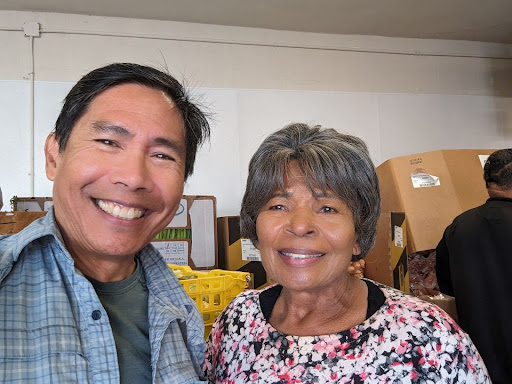
CCLR’s Ignacio Dayrit with Ms. Nellie Hannon at the Emeryville Citizens Assistance Program’s temporary location during the redevelopment of their long-standing foodbank
October: Honolulu Area Rapid Transit (HART) Opens Segment 2 of its elevated light rail system. Section 2 includes three new stations, including a connection with the Daniel K. Inouye International Airport. The City of Honolulu uses EPA brownfield funding to assess site conditions along the new rail line. The third planned segment will take the light rail to downtown Honolulu, connecting education, government, and Chinatown with the expanding system. The elevated rail line is providing the City with the necessary catalyst to redevelop the Iliwei neighborhood, adding up to 27,000 dwelling units, creating new shopping and recreation options, and cleaning up several brownfields in the process. With an 80+ acre planning area, the City and County engaged CCLR in 2024 to facilitate workshops that convened appropriate agencies to identify potential challenges and solutions before the project experienced hurdles. The City and County are utilizing CCLR’s plan to usher this expansive brownfield reuse forward, including potential application of an FY26 community-wide assessment grant.
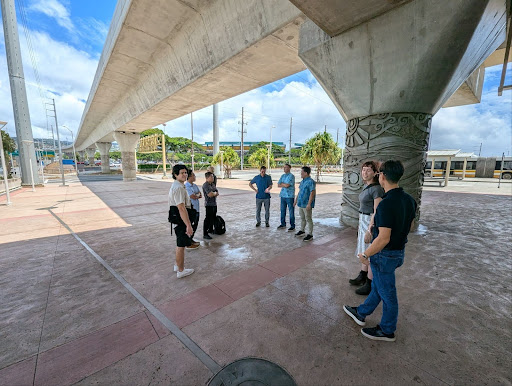
EPA and Honolulu Staff with CCLR Team Members during tour of the HART System
October: The Copper River Native Association (CRNA) of Alaska celebrated the completed cleanup of the old Bureau of Indian Affairs (BIA) Copper Center School Site. The school closed in the 1970s or 1980s and fell into disrepair. A U.S. EPA Targeted Brownfield Assessment (TBA) in 2023 paved the way for cleanup, while the EPA’s Tribal Response Program issued a grant to remove the hazardous building materials and demolish the long shuttered school. CCLR Consultants Joy Britt and Sebastian Harrison provided technical assistance through the cleanup process. As part of the demolition, CRNA held listening sessions where they collected memories and stories from former students and community elders. Former students shared about experiences of this school and hopes to return the site to its natural state.
November: Northgate González Market opens in Lynwood, CA, alleviating a long-standing food desert. A prominent corner in Lynwood, which has long been considered the ideal spot for a grocery store, finally saw its vision realized in November. Thanks to a $5.1 million-dollar ECRG cleanup grant to remove extensive petroleum contamination left by a shuttered gas station, this site now provides access to fresh food, as well as 225 permanent jobs. CCLR supported this project with grant preparation support, grant application review, and assistance with grant management.
November: Groundbreaking of the Algarve Apartments in San Jose, CA. The City of San Jose broke ground on a 90-unit affordable housing complex after a $3 million ECRG grant cleaned up extensive contamination left by a drycleaning business. The complex will feature 46 units of permanent supportive housing for residents with extremely low incomes. The City is developing Algarve Apartments with partners Adobe Services and the County of Santa Clara. CCLR supported the City of San Jose’s ECRG grant application.
November: California’s first cross laminated timber manufacturing equipment arrives at the Indian Valley Wood Utilization Campus in Crescent Mills, CA. Specialized equipment to transform small-diameter trees cleared for fire prevention/hazard reduction efforts into fire-resistant housing panels will be installed at the previous Louisiana Pacific Sawmill site, which closed in 1986. The Sierra Institute leveraged EPA brownfield grants to assess and cleanup the site, reopening it for production of locally-sourced building materials to help local communities rebuild from the Dixie Fire. In 2025, the Sierra Institute also closed out its EPA cleanup grant, signaling the next step for the campus, which is once again providing jobs and building materials in rural mountain west communities.
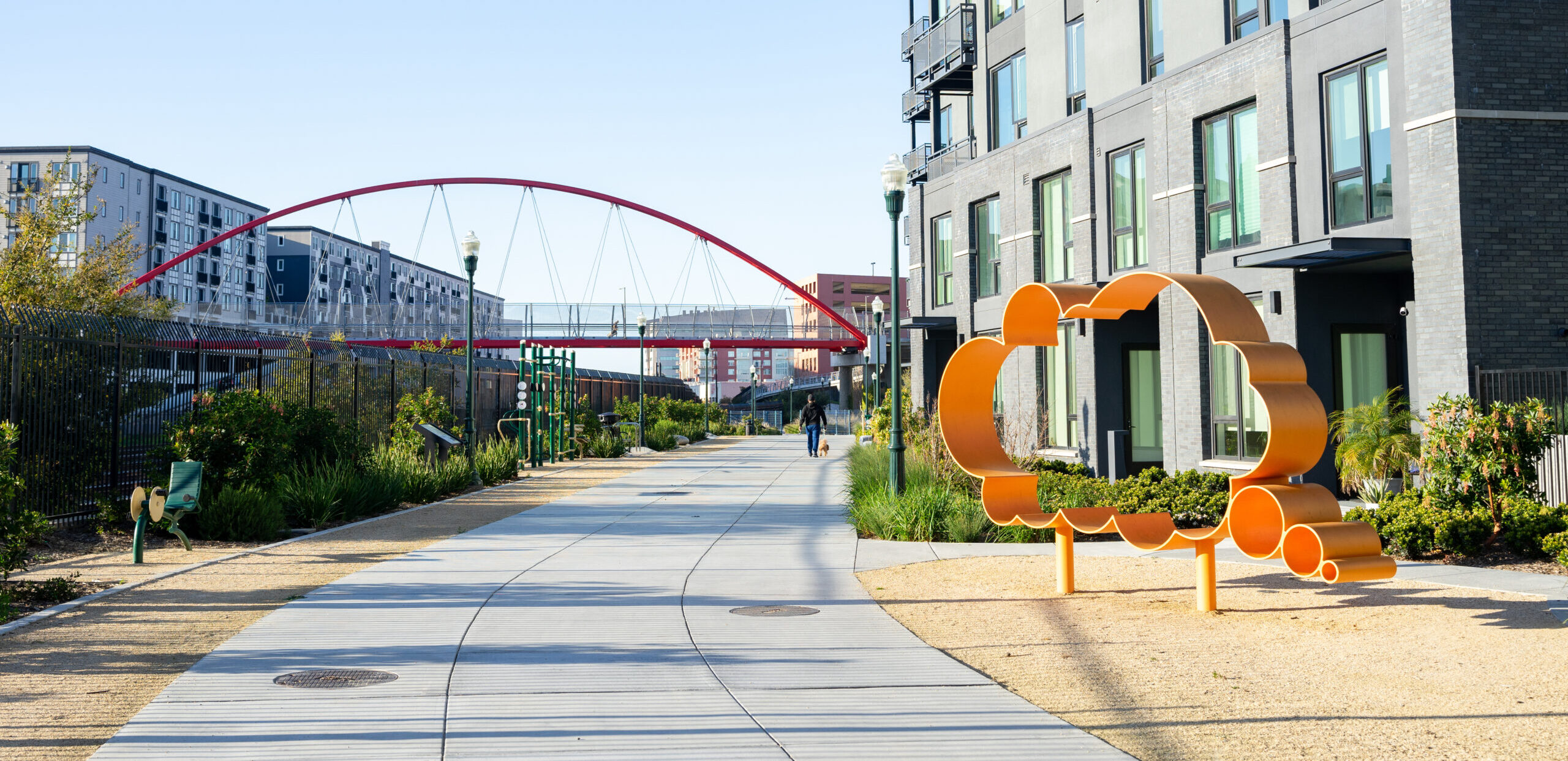
December: Emeryville, CA holds ribbon cutting for the Emeryville Greenway in the Rotten City Cultural District. Thanks to a multi-year brownfields initiative, the southern section of the City’s Greenway is now open. CCLR provided technical assistance for several sections of the Greenway, helping the City to receive multiple EPA grants to make this vision a reality. CCLR team member (and former Emeryville brownfield lead) Ignacio Dayrit was on hand to celebrate this milestone with the City.
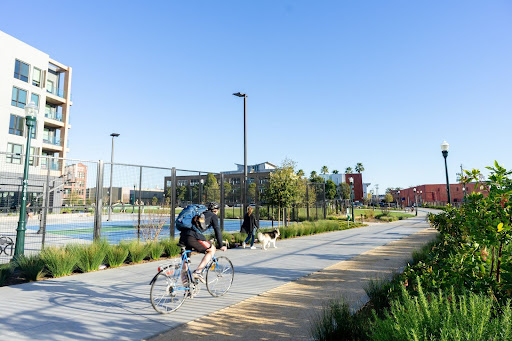
Emeryville Greenway