Holy Redevelopment! YIGBY with Brownfields in Action
The Yes In God’s Back Yard (YIGBY) movement is gaining attention as a solution for community development nationwide. However, case studies have been focused on the “Main Street” and mainline faith denomination properties and the most unique and creative reuses. Originally tied to affordable housing, YIGBY now includes parks, schools, and community services built on faith-based land. Faith properties with former industrial or commercial uses onsite or nearby may also be eligible for brownfields funding.
Church owned property development represents both risk and opportunity, since estimates show that tens of thousands of churches are likely to close in coming years. The opportunities are in plain sight once more people get used to the idea of multi-purpose religious organization-owned land. The existing and emerging faith leadership and affiliated resources can deliver needed community services and growth. There is risk in investing in institutions which are struggling, so it needs to be done carefully. With brownfields, environmental issues present risks but the opportunity is there to measurably improve community health.
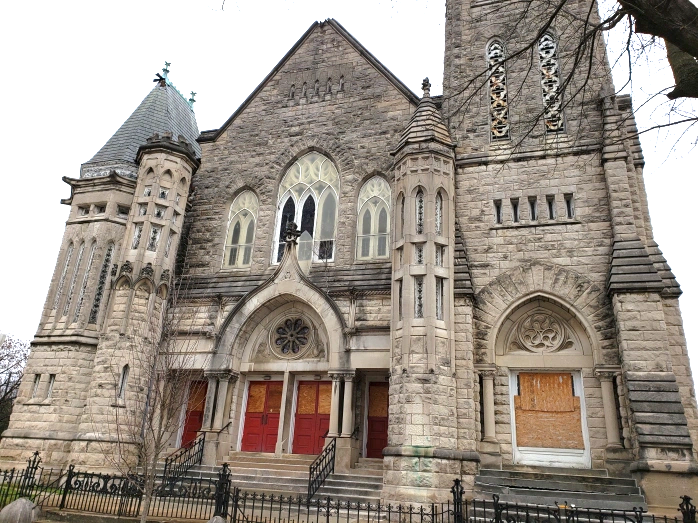
St. Peter’s Church, Louisville, KY
CCLR continues to highlight this Faith-based “Holy Redevelopment” of brownfield properties – in California and increasingly across the country. This blog explores two case studies originally presented in CCLR’s session “Holy Redevelopment! IGBY with Brownfields in Action: Revitalizing and expanding physical and social faith-based assets” at the National Brownfields Training Conference in Chicago in August, 2025.
In West Oakland, CA the Friendship Christian Center located in a former funeral home, was demolished and is being replaced by the Friendship Senior Housing complex with ground floor multipurpose space for residents and the church. In Louisville, KY St. Peter’s United Church of Christ redeveloped its parking lot into a “Village” of business incubators and various services, and the historic sanctuary and education building is being completely revamped to accommodate a different mix of activities. Housing and businesses are two reuse options which are both in demand and financeable.
Across North America, many churches like these face declining membership and rising maintenance costs. Additionally, most have limited financial and technical capacity. These challenges are often acute for minority-led congregations located in areas affected by historic redlining. EPA “Cleanups in my Community” data shows clusters of contaminated sites in these communities. West Oakland is home to Port, manufacturing and transportation uses, and leaders there have been fighting for environmental justice since the early 1990s. (www.KQED.org). West Louisville is home to old light industrial and chemical plants, and residents have life expectancies five to ten years lower than other parts of the city (U. of Louisville, 2023).
A broad movement of different supporters is stepping up with creative ways to help. From California to New York and Florida, Legislatures have enacted (or are considering) legislation supporting housing on faith-owned land. Church-related financial institutions are re-directing their investment strategies. Federally, Congress has introduced bills to support technical assistance and projects (S. 2720 and HR 6975). National housing intermediaries like LISC and Enterprise have expanded their Faith-Based development assistance, and many local private and non-profit ventures are helping coordinate resources. In California, a combination of funding availability, extreme housing demand, and a well organized non-profit network has started to reach congregations in brownfield zones. The state Department of Toxic Substances Control (DTSC) Equitable Communities Revitalization Grant (ECRG) program is showing how environmental cleanup, faith properties, and community-serving uses can align. Five of the properties awarded ECRG grants so far are Faith organization owned – four now producing affordable housing and one a community garden.
The Village at W. Jefferson, 2021
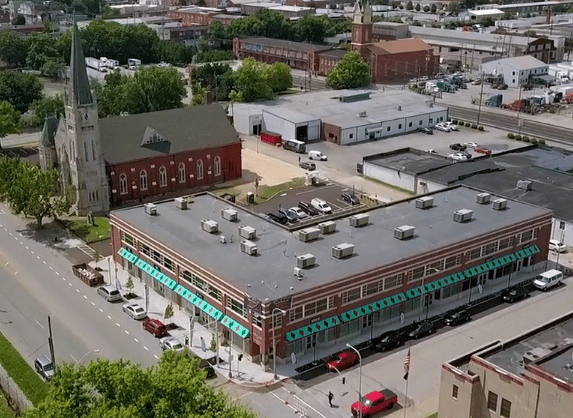
St. Peter’s project was spurred by HUD Choice Neighborhoods grants, where the local Housing Authority led the community to create a neighborhood-wide Vision Russell Transformation Plan. Rev. Dr. Jamesetta Ferguson was a participant, and led efforts in the community for decades including creating the Molo Village Community Development Corporation. When redevelopment planning was underway, the church realized that HUD and other institutions would financially assist other projects in the vicinity complementing the public housing replacement (see National League of Cities article). Jobs and business creation were top priorities for residents, while the housing supply was not an issue . The result is “The Village at West Jefferson” after Molo Village took over part of a parking lot. Investments of $7.9 Million created a $27 Million economic impact: 102 jobs and multiple ownership/management opportunities at a restaurant, cafe, health/wellness clinic, and entrepreneur/business support, job training, and other social services. The Church Building and Loan Fund also was a partner in developing and financing the project, and has evolved into a nationwide leader for projects like these.
Faith institutions offer far more than buildings and land. They provide trusted leadership, deep community ties, and essential programs such as food distribution, childcare, education and other services. Many have well-located property usually underused from a development perspective. When congregations cannot adapt their properties to sustainable models, communities risk losing these services altogether. Redevelopment and enhancement of these properties clearly prevents displacement.
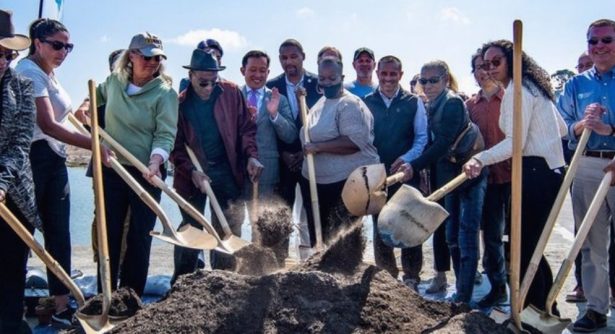
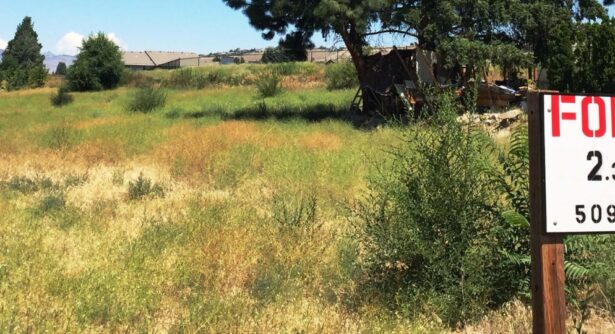
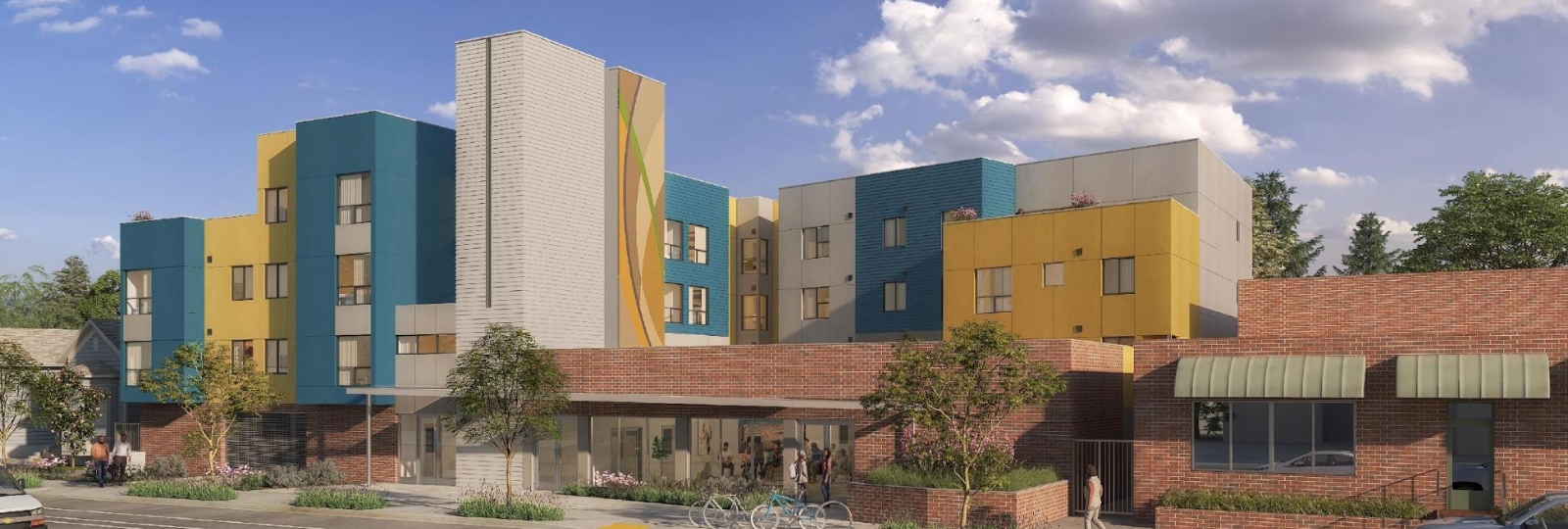
Friendship Christian’s Pastor Dr. Gerald Agee saw a need for affordable housing in Oakland and leveraged his network of pastors to secure assistance from the County and Local Initiatives Support Corporation to get started under their “Faith and Housing” initiative. He was paired up with a seasoned architect and a housing finance expert to help test the feasibility. Then they joint ventured with experienced developer Community Housing Development Corporation to get it financed and built. The State ECRG funds helped make the project financially viable and leveraged other resources to make it a healthy place to live. They eliminated the old funeral home building and designed a new multi-purpose space on the ground floor of the new structure which accommodates the church part time use. The facility will soon house fifty very low-income senior households at an affordable price with supportive services right across the street from the library branch and community center. Agee’s experience as a Realtor and community leader drove the church to decide to also start their own non-profit 501(c)3 and plan to do more than just this one project.
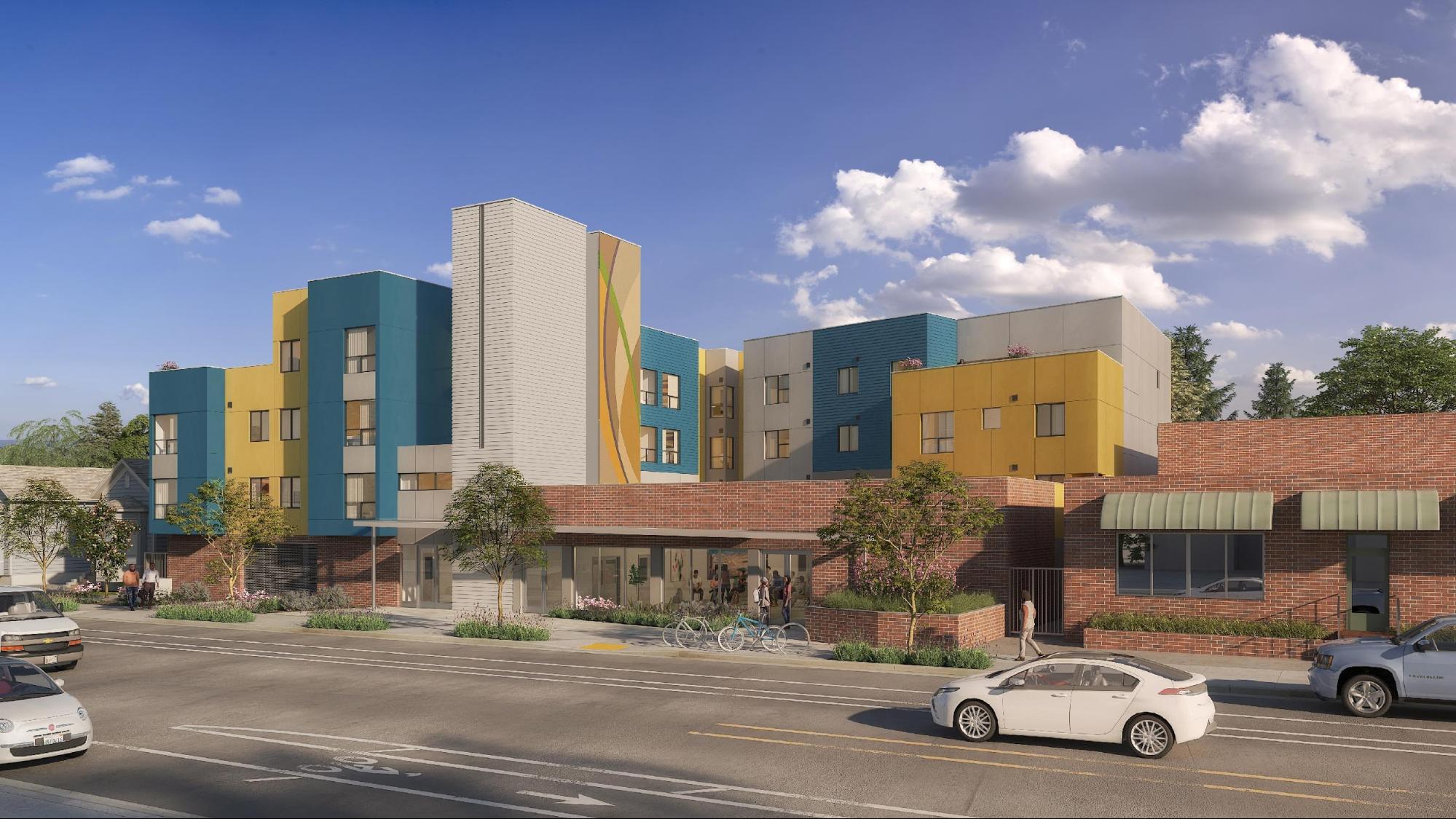
Friendship Senior Housing, Oakland CA (rendering by Kodama Diseno Architects)
Experience has shown that success depends on partnerships like these including early stage unbiased advisors offering technical assistance with zoning, environmental, financial feasibility, and legal issues. Community-based organizations looking to redevelop their property are then best positioned to lead on project vision and satisfying community needs with the help of a developer. Funding for project conception, feasibility, and startup is another important hurdle to cross. Early project stages are especially risky, making grants and forgivable loans essential. A whole spectrum of financial institutions need to step up even more if we don’t want to lose these opportunities.
When faith-based properties become financially sustainable, communities benefit. Affordable housing helps residents stay as costs rise. Workforce and business development increase opportunity. CCLR invites you to share with us other examples with brownfield issues from across the country, and particularly in western EPA Regions 9 and 10 so we can help publicize successes and expand technical assistance resources. With the right support, these properties and organizations can remain a powerful force for stability, equity, and renewal.