Viva Las Brownfields: Reimagining sites in Las Vegas and North Las Vegas
NEVADA BROWNFIELDS MOBILE TOUR
Join Us on the Ground:
This tour is part of the Nevada Brownfields Conference
May 6-7, Las Vegas, Nevada
Hosted by the Nevada Department of Environmental Protection (NDEP) Brownfields Program
Las Vegas is famous for reinvention. But the most remarkable transformations happening in this region right now aren’t on the Strip. Some of the most consequential changes in this region are happening on former rail yards and vacant lots — places most people drive past without a second glance — now becoming the cultural and civic anchors of a reimagined downtown.
The Nevada Brownfields Mobile Tour invites participants to step out of the conference room and into the neighborhoods where that story is unfolding. Our guided tour visits three remarkable sites in North Las Vegas and downtown Las Vegas, each a testament to what’s possible when communities, city leaders, environmental professionals, and state agencies work together to give contaminated land a second chance.
Along the way, we’ll also point out properties identified through the Regional Transportation Commission of Southern Nevada’s brownfields assessment grant — connecting the dots between transit corridors, environmental cleanup, and equitable community development across the region.
Stop 1: Former North Las Vegas City Hall — Downtown North Las Vegas
Our tour begins in the heart of downtown North Las Vegas, where the story of one city’s reinvention is playing out in real time.
The former city hall at 2200 Civic Center Drive served the community for decades before city personnel relocated to a new facility in 2011. For 14 years, the building sat vacant — a familiar fate for aging civic infrastructure in rapidly growing communities. But rather than accept stagnation, North Las Vegas leaders made a bold choice: tear it down and build something the city actually needs.
City Hall is one of five buildings on a 19-acre site. Because of the age of the buildings, the City conducted Phase I ESA using the EPA Assessment Grant. The assessment revealed concerns about asbestos, lead-based paint, mercury, and an above ground tank. Phase II ESA identified asbestos throughout the building: in the ceiling panels, in the mastic of the bathroom and floor tile, in the mastic of the fire suppression piping joints, in the exterior stucco, mercury in the thermostats, lead-based paint on metal loading doors and on clear glaze on the ceramic tile.
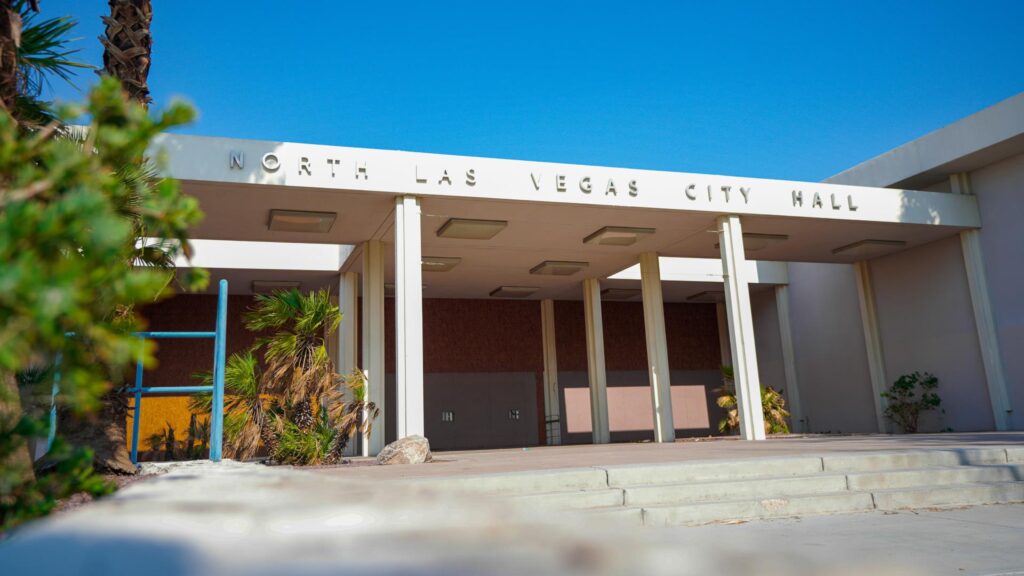
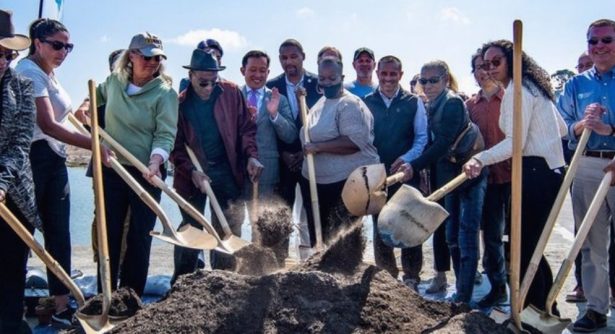
The hazardous building materials were abated, and on January 21, 2026, Mayor Pamela Goynes-Brown operated an excavator to kick off demolition — a moment that was both deeply personal and profoundly symbolic. Her father, former Councilman Theron H. Goynes, had served in that very building, as had she during her first term on the council. “This development will be a catalyst for our downtown economy and energize the heart of North Las Vegas, bringing new housing, jobs, and amenities,” the Mayor said. “Our city is growing, our population is growing, and our ambitions are growing.”
The 19-acre redevelopment — branded “One Civic Center” and led by Agora Realty and Management — will unfold in phases: a new civic building first (targeted for Spring 2027), followed by up to 300 residential units, commercial space, and public green areas. The project is projected to generate $112.2 million in economic activity during construction, with an annual ongoing economic benefit of $20.5 million once complete.
On this stop, you’ll hear directly from city leadership about the financing strategies, community engagement process, and regulatory pathway that made this project possible — and what it means for downtown North Las Vegas’s future.
| 🎤 Speaker: Scott Carter — City of North Las Vegas |
Stop 2: Dolores Huerta Resource Center — Nevada’s First Community Hub
From the demolition site, we travel to 1737 Hunkins Drive — where North Las Vegas has built something the state of Nevada has never seen before. The former Nevada Energy Office has been reimagined as the Dolores Huerta Resource Center. Phase I and Phase II ESA were conducted using the EPA Assessment Grant to investigate the potential for Asbestos Containing Material (ACM). The facility has been remodeled to provide a one-stop community center providing support in Arts and Culture, Education, Legal Workshops, Health Services, Technology, and Workforce Development.
The Dolores Huerta Resource Center, which opened on April 22, 2025, is the first facility of its kind in Nevada. Named for the legendary civil rights and labor activist who co-founded the United Farm Workers union with César Chávez, the center embodies her enduring rallying cry: Sí, Se Puede — Yes, We Can.
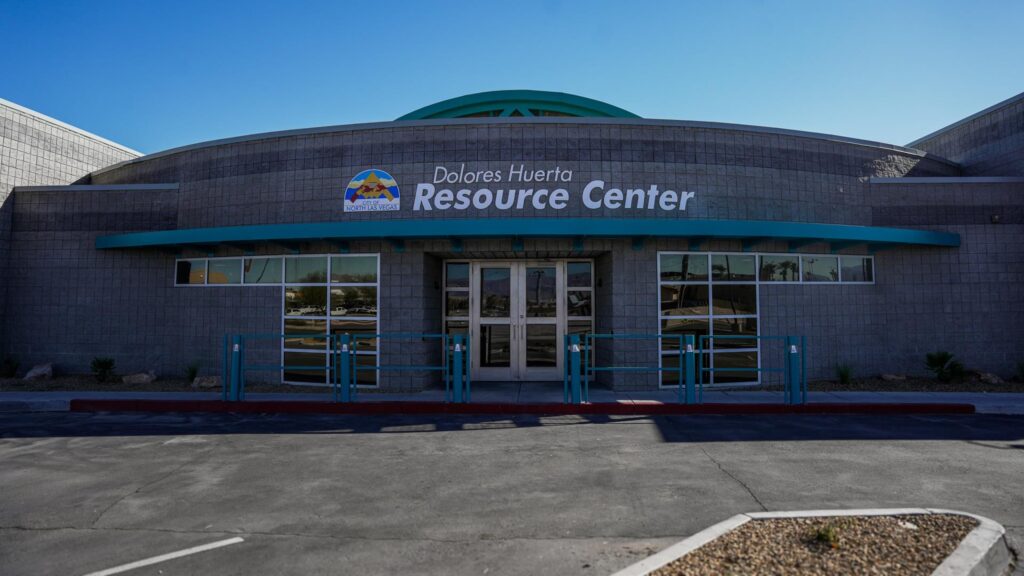
Operated by The Just One Project and backed by $1.6 million in federal Community Project Funding, the center brings together multiple service providers under one welcoming roof. All services are offered free of charge, in both English and Spanish, and the center is expected to serve more than 2,000 residents annually. Services span free educational classes and GED preparation, health screenings, mental health counseling, legal workshops, workforce development, technology training, and arts and cultural programming.
For brownfield practitioners, this stop illustrates a dimension of land revitalization that often goes underdiscussed: that brownfield reuse can directly serve and benefit surrounding residents. The Dolores Huerta Resource Center is proof that equity and revitalization can — and should — go hand in hand.
| 🎤 Speaker: Scott Carter — City of North Las Vegas |
| 🚌 On the Road: RTC of Southern Nevada Brownfields Sites As we travel from North Las Vegas to downtown Las Vegas, our guide will point out properties along the route identified through the Regional Transportation Commission of Southern Nevada’s brownfields assessment grant. As a coalition partner in Clark County’s EPA brownfields program, the RTC has been identifying transit-corridor sites ripe for environmental assessment and redevelopment — connecting smart cleanup work to transit-oriented development opportunities across the region. Tour liaison: Laura Sida, RTC of Southern Nevada. |
Stop 3: Symphony Park — From Railyard to the Cultural Heart of Las Vegas
We conclude our tour at Symphony Park — and if there is one brownfields success story in the American West that makes the case for this work more powerfully than any other, this is it.
For more than 70 years, Union Pacific Railroad operated a fueling and maintenance yard on this 61-acre parcel in the heart of downtown Las Vegas. Petroleum hydrocarbons, solvents, and metals soaked into the soil and groundwater and stayed behind, even after Union Pacific left. The land sat contaminated and fenced off — a brownfield in every sense of the word.
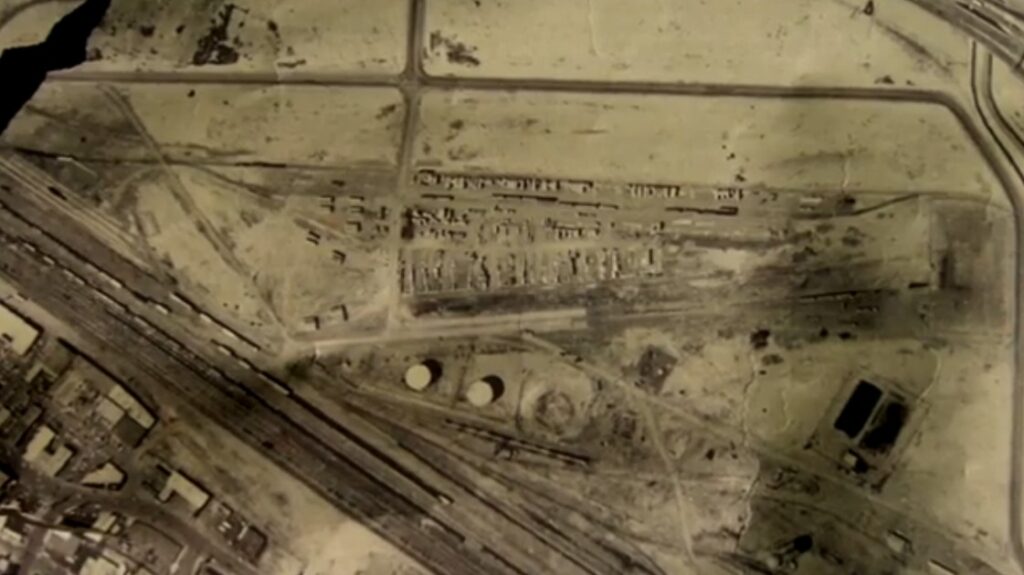
The City of Las Vegas purchased the site in 2000 with a vision: transform a toxic industrial legacy into a walkable, mixed-use downtown district. What followed was a multi-decade, multi-party effort involving the Nevada Division of Environmental Protection (NDEP), Union Pacific, the Nevada Brownfields Program, and a succession of developers willing to build on remediated land. The total brownfields cleanup ultimately cost approximately $30 million.
The Nevada Brownfields Program invested $90,362 to support Phase I environmental site assessments and the ongoing Soil and Groundwater Management Plan — helping unlock over $750 million in combined public and private development.
|
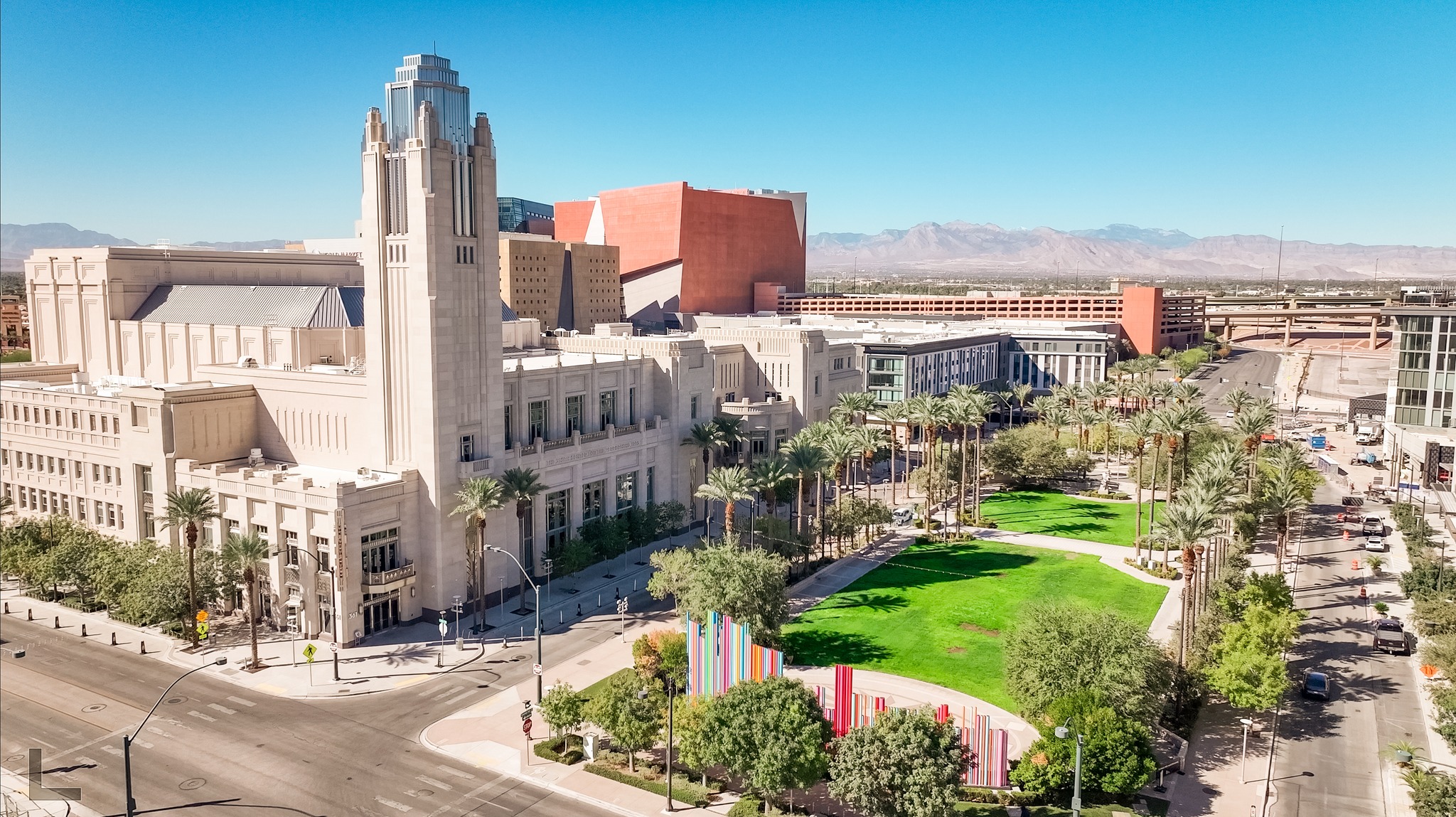
In 2025, Symphony Park was named ULI Nevada Place of the Year — anchored by three landmark institutions: The Smith Center for the Performing Arts, Las Vegas’s first world-class concert hall; the Cleveland Clinic Lou Ruvo Center for Brain Health, Frank Gehry’s iconic building dedicated to researching brain diseases; and the Discovery Children’s Museum, a 26,000-square-foot facility with nine interactive galleries.
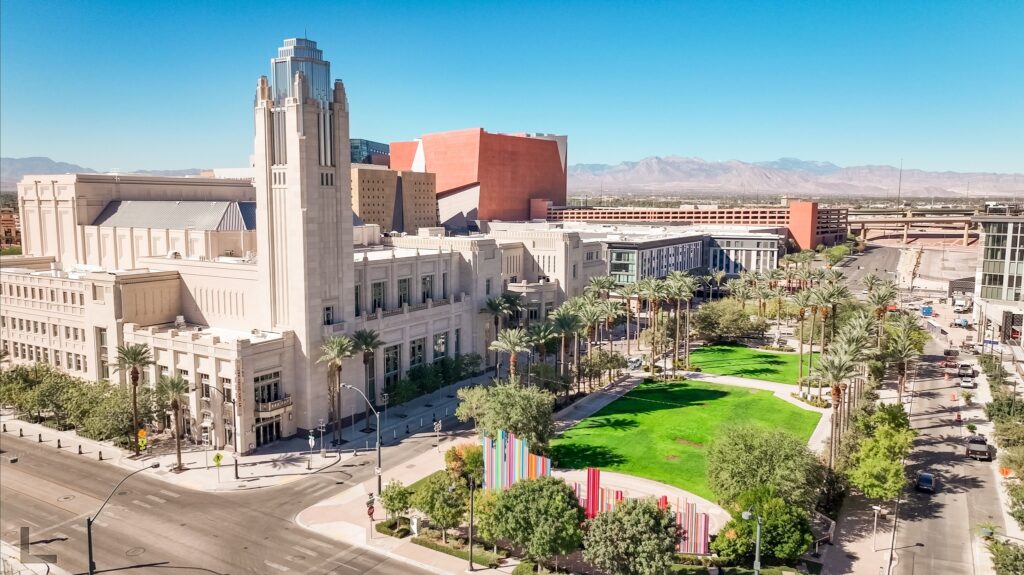
Residential development has surged in recent years, with 600+ luxury units open, a 30-story condominium tower in development, a 441-room hotel newly opened, and a $150 million Las Vegas Museum of Art — designed by Pritzker Prize laureate Diébédo Francis Kéré in partnership with LACMA — expected to break ground in the coming years. Symphony Park holds LEED Gold certification and is the only project in Nevada accepted into the national LEED-ND pilot program.
| 🎤 Speaker: Tracy Reich — City of Las Vegas |
| Why This Tour Matters Brownfield redevelopment is often discussed in technical terms — assessments, cleanup standards, liability protections, tax credits. But at its core, it is about people and places. The sites on this tour represent what happens after the remediation reports are filed and the cleanup contractors pack up: the housing that families move into, the cultural institutions that define a city’s identity, the resource centers where a parent finds job training or a teenager gets a health screening. Across North Las Vegas and Las Vegas, dedicated city professionals, community organizations, and state partners have done the hard, unglamorous work of turning contaminated liabilities into community assets. The former North Las Vegas City Hall site shows that even long-vacant civic properties can be catalysts for downtown renewal. The Dolores Huerta Resource Center demonstrates that revitalization must be designed with and for the people who live in the community. And Symphony Park stands as proof that the most dramatic brownfields transformations are possible with the right combination of vision, partnership, and persistence. The Nevada Brownfields Program is proud to bring this tour to participants and to spotlight the city officials, community leaders, and environmental professionals whose work makes stories like these possible. We hope you’ll join us. |
Join us on this tour of remarkable, transformative properties in the Las Vegas area. Register Today for the Nevada Brownfields Conference.